

Common Mold Remediation Problems in Englewood
Englewood homeowners face distinct mold challenges shaped by Bergen County's climate and the city's mix of historic and modern housing. The area's proximity to the Hackensack River and numerous streams creates persistently damp conditions, particularly in low-lying neighborhoods and properties with aging drainage systems.
Many residences in Englewood's established districts, including those near Depot Square and along Palisade Avenue, were constructed decades before modern moisture barriers became standard. These older homes often harbor hidden mold colonies within plaster walls, crawl spaces, and unfinished basements that lack adequate waterproofing. Summer humidity frequently pushes indoor moisture levels beyond 60 percent, triggering active mold growth on drywall, ceiling tiles, and HVAC components.
Basement flooding represents another recurring issue. Properties near Flatrock Brook and other waterways experience periodic water intrusion during heavy rainfall events. Even without overt flooding, capillary moisture seepage through foundation walls sustains chronic dampness ideal for Aspergillus, Penicillium, and Stachybotrys colonization. Homeowners sometimes discover extensive contamination only after noticing persistent musty odors or experiencing unexplained respiratory symptoms.
Condominium and multi-family buildings common near Englewood's commercial corridors introduce additional complexity. Shared ventilation systems can distribute mold spores between units, while delayed maintenance of common-area plumbing creates cascading moisture problems affecting multiple residences simultaneously.
How We Help Englewood Homeowners
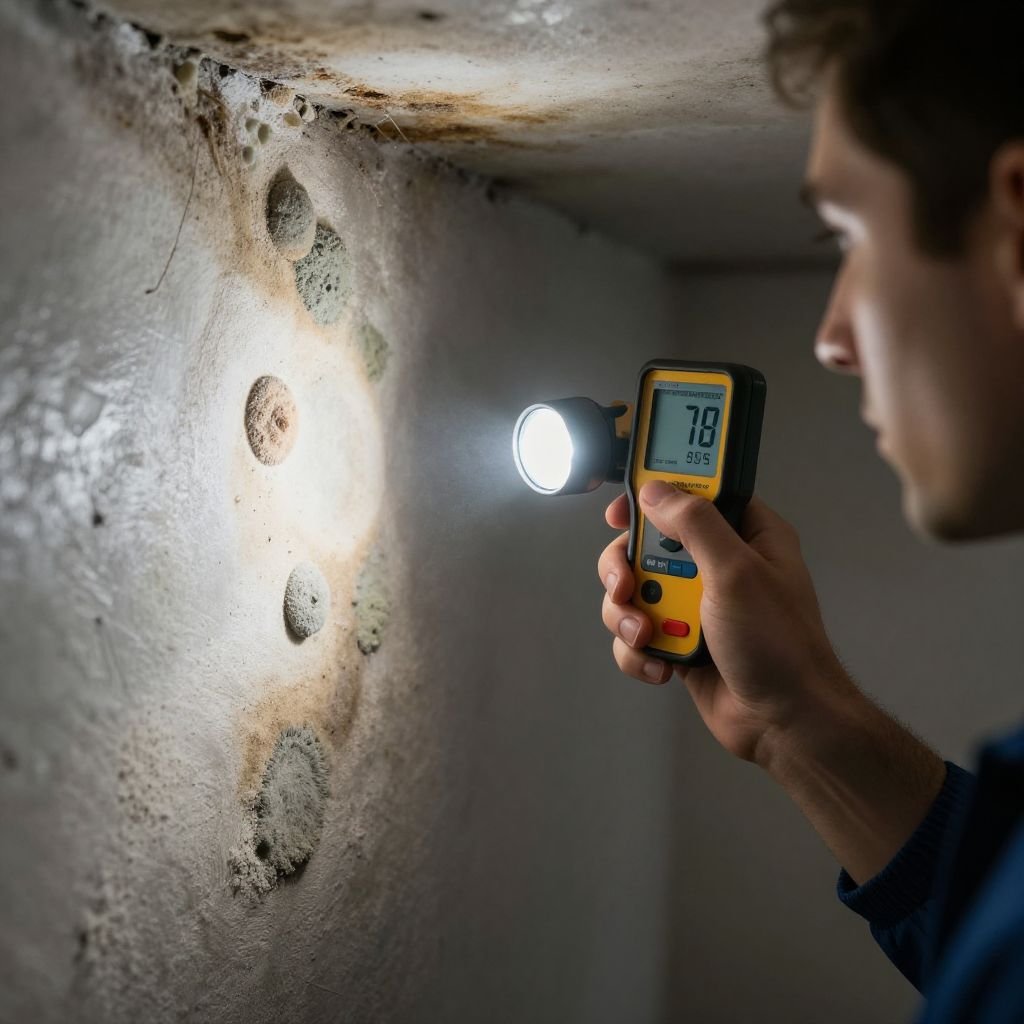
Our mold remediation process begins with thorough moisture mapping and air quality assessment to identify contamination extent and underlying water sources. We employ infrared thermal imaging to detect hidden moisture behind finished surfaces—critical for Englewood's older homes where mold frequently extends beyond visible areas.
Containment protocols prevent spore dispersal during remediation, protecting unaffected spaces and neighboring units in multi-family structures. HEPA filtration and negative air pressure systems maintain controlled work environments throughout the project duration.
Beyond mold removal, we address root causes: repairing foundation seepage, improving drainage grading, installing proper vapor barriers, and recommending dehumidification strategies suited to each property's specific conditions. This integrated approach reduces recurrence risk—a particular priority given Englewood's environmental susceptibility to moisture problems.
Documentation and post-remediation verification testing provide clearance documentation for real estate transactions, insurance claims, and tenant health concerns.
Mold Remediation Services Available in Englewood
- Residential mold inspection and testing — Air, surface, and ERMI/HERSTMI-2 dust analysis for comprehensive contamination assessment
- Basement and crawl space remediation — Specialized treatment for below-grade moisture environments common throughout Bergen County
- Attic mold removal — Addressing roof leaks, inadequate ventilation, and ice dam moisture infiltration
- Whole-home dehumidification consultation — System sizing and placement for Englewood's humidity profile
- Water damage restoration — Emergency extraction and structural drying to prevent secondary mold growth
- Post-remediation clearance testing — Third-party verification for property transactions and insurance requirements
- HVAC mold cleaning — Ductwork decontamination for forced-air systems distributing spores
Mold Remediation Pricing in the Englewood Area
Mold remediation costs in Englewood typically range from $1,500 for localized bathroom or closet treatment to $8,000–$15,000 for extensive basement or whole-house contamination involving structural materials replacement. Several factors influence final pricing:
Containment complexity increases in finished spaces requiring careful demolition and reconstruction, or in occupied multi-unit buildings where neighboring spaces must remain protected. Material accessibility affects cost—mold behind intact plaster in historic Englewood homes demands different approaches than surface growth on modern drywall. Laboratory analysis fees for pre- and post-remediation testing add $300–$800 depending on sample quantity.
Most homeowner insurance policies cover mold remediation when directly resulting from covered water damage events, though coverage limits and exclusions vary. We provide detailed documentation to support claims and can coordinate directly with adjusters.
Inspection-only services begin around $350, with remediation quotes developed after on-site evaluation. We offer transparent itemized proposals without pressure tactics.
Frequently Asked Questions
How quickly can mold grow after water damage in an Englewood home?
Mold colonization typically begins within 24–48 hours of moisture exposure. In Englewood's humid summer conditions, active growth can accelerate significantly. Immediate water extraction and structural drying within this window prevents most mold problems from developing.
Is mold in my Englewood basement dangerous?
Basement mold varieties common in Bergen County—including Aspergillus and Penicillium species—can trigger allergic reactions, asthma exacerbation, and respiratory irritation. Some individuals experience more severe symptoms. Chronic exposure risk increases when HVAC systems draw air from contaminated basements.
Can I remove mold myself with bleach?
Chlorine bleach is ineffective against porous material mold penetration and can worsen contamination by adding moisture. Professional remediation addresses root moisture sources, removes contaminated materials safely, and applies EPA-registered antimicrobial treatments with proper containment.
Will mold return after professional remediation?
Recurrence is preventable when underlying moisture causes are resolved. Our Englewood projects include moisture source identification and correction recommendations. Properties with chronic groundwater intrusion may require ongoing dehumidification or waterproofing systems for lasting protection.