

Mold Remediation Services in Eatontown, NJ
Eatontown homeowners and business owners face unique mold challenges due to Monmouth County's coastal climate, seasonal humidity, and aging housing stock. From historic properties near Route 35 to newer developments around the Monmouth Mall area, moisture intrusion creates ideal conditions for mold growth throughout the year.
Our comprehensive mold remediation services address the full spectrum of contamination scenarios common in Eatontown. Whether you're dealing with basement flooding after heavy rains, HVAC system moisture issues, or hidden mold behind walls, professional intervention protects both property value and occupant health.
We serve residential properties, commercial spaces, and municipal buildings throughout Eatontown with certified technicians who understand local building codes and New Jersey Department of Health requirements for mold abatement.
Frequently Asked Questions About Mold Remediation in Eatontown
How does Eatontown's proximity to the coast affect mold risk?
Coastal proximity elevates baseline humidity levels significantly compared to inland New Jersey communities. Summer months bring sustained relative humidity above 70%, while nor'easters and tropical systems can introduce sudden water intrusion. Properties within flood-prone zones near the Shark River tributaries face compounded risks requiring proactive moisture management and faster response protocols when mold appears.
What should I do if I smell musty odors but can't see mold?
Hidden mold colonies frequently produce detectable odors before visible growth appears. In Eatontown's older homes—particularly pre-1980s construction near Main Street and Broad Street—musty smells often indicate mold within wall cavities, beneath flooring, or inside HVAC ductwork. Professional moisture mapping and air sampling identify contamination sources without unnecessary demolition. We recommend inspection rather than waiting for visible confirmation, as delayed response typically increases remediation scope and cost.
Are there specific mold types common to Monmouth County properties?
Aspergillus, Penicillium, Cladosporium, and Stachybotrys chartarum (black mold) all appear regularly in tested Eatontown properties. Basements and crawl spaces with foundation seepage typically harbor Aspergillus and Penicillium species. Water-damaged drywall and cellulose materials may support Stachybotrys growth. Each species requires tailored remediation approaches, containment protocols, and clearance testing methodologies to ensure complete removal.
How long does professional mold remediation typically take?
Timeline varies by contamination extent and affected materials. Limited surface growth in single rooms generally resolves within 2-3 days. Widespread basement or crawl space infestations requiring structural drying, material removal, and reconstruction may extend to 1-2 weeks. We provide detailed timelines following initial assessment, with expedited scheduling available for Eatontown properties with vulnerable occupants including infants, elderly residents, or individuals with respiratory conditions.
Eatontown-Specific Mold Concerns
Properties near Fort Monmouth's former grounds present particular challenges as redevelopment continues. Converting military barracks and administrative buildings to residential and commercial use often reveals decades of deferred maintenance including roof leaks, plumbing failures, and inadequate ventilation that fostered extensive hidden mold.
Residential neighborhoods between Route 35 and the Garden State Parkway—including Trotters Pointe, Wyckoff Mills, and Eatontown Center—experience recurring basement moisture during spring thaw and fall storm seasons. Sump pump failures and sewer backups create Category 3 water damage requiring specialized sanitization alongside mold prevention.
Commercial tenants in Eatontown's retail corridors along Route 36 and near the mall should monitor for condensation on ductwork and around refrigeration equipment. Flat-roof commercial construction common in these areas develops membrane failures that admit water slowly, with mold establishing before ceiling stains become apparent.
Our Eatontown Mold Remediation Process
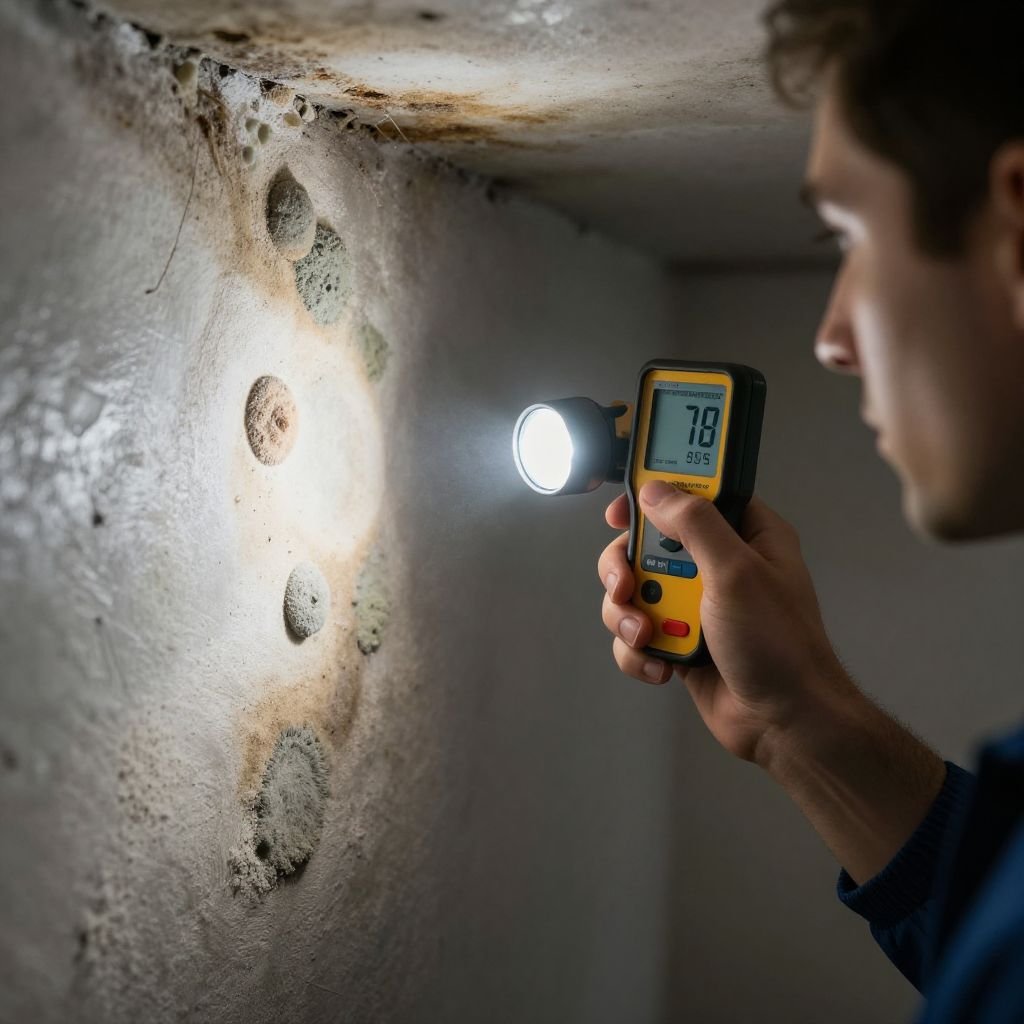
Every project begins with comprehensive assessment including moisture detection, thermal imaging, and air quality sampling when indicated. We document pre-existing conditions and establish containment barriers before disturbance of mold-contaminated materials.
Removal protocols follow IICRC S520 standards and New Jersey worker protection requirements. HEPA filtration maintains negative air pressure during remediation. Porous materials with deep contamination—drywall, insulation, carpet padding—are removed rather than cleaned. Semi-porous and non-porous surfaces undergo agitative cleaning with antimicrobial agents followed by HEPA vacuuming.
Post-remediation verification includes visual inspection, moisture content measurement below 16%, and optional third-party air sampling to confirm spore counts returned to background levels. We provide documentation supporting real estate transactions and insurance claims.