

Common Mold Remediation Problems in Lake in the Hills
Homeowners in Lake in the Hills face distinct mold challenges tied to McHenry County's climate and local building conditions. The area's proximity to wetlands, lakes, and the Fox River watershed creates naturally high humidity levels that persist from spring through fall. Combined with freeze-thaw cycles that stress building envelopes, these conditions make mold growth a recurring concern for residents throughout the village.
Several specific problems emerge repeatedly in Lake in the Hills mold remediation calls:
- Basement mold in split-level and ranch homes — The village's housing stock, much of it built during the 1980s and 1990s development boom, features below-grade spaces with inadequate vapor barriers. Sump pump failures during heavy rains or snowmelt lead to moisture accumulation behind finished walls.
- Attic mold from ice damming — Poor attic ventilation, common in homes with complex rooflines, traps warm moist air. Winter ice dams force water under shingles, saturating insulation and sheathing before homeowners notice staining on ceilings.
- Crawl space moisture — Homes near the wetland areas along Woods Creek Road and Silverstone Lane experience elevated groundwater. Ventilated crawl spaces in these locations pull humid summer air across cool surfaces, creating condensation that feeds mold on floor joists and subflooring.
- HVAC system contamination — Extended cooling seasons run evaporator coils continuously, and neglected drain pans or clogged condensate lines become breeding grounds for mold that distributes spores throughout living spaces.
Many residents initially mistake musty odors for "old house smell" or attempt DIY bleach treatments that leave hidden hyphae intact. This allows Aspergillus, Penicillium, and Stachybotrys species to reestablish within weeks, often worse than before.
How We Help Lake in the Hills Homeowners
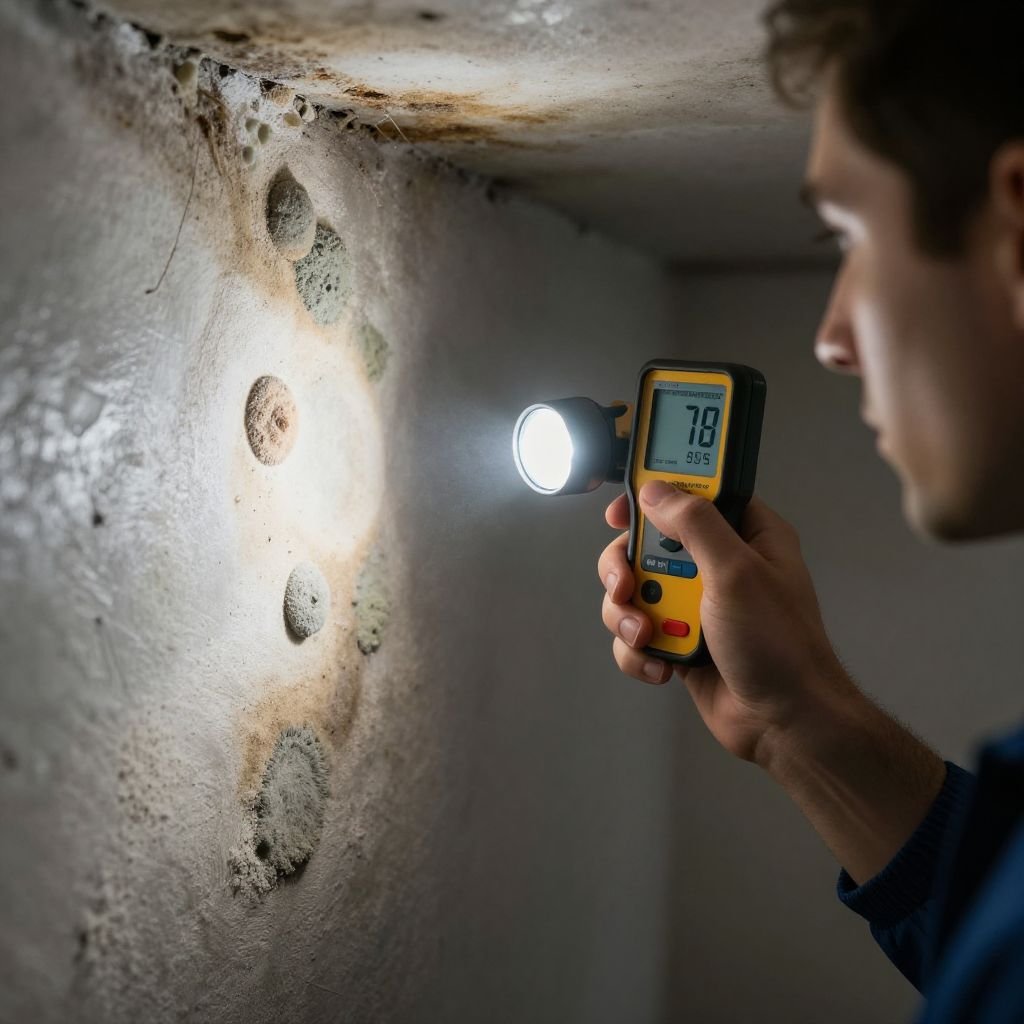
Our approach addresses both immediate mold removal and the underlying moisture dynamics specific to your property. We begin with comprehensive moisture mapping using thermal imaging and hygrometric testing to identify hidden water intrusion paths — not just visible growth.
For Lake in the Hills properties, we pay particular attention to:
- Foundation grading and drainage assessment — Many homes in the older sections near Algonquin Road lack proper slope away from the foundation. We coordinate with drainage contractors when exterior water management requires correction.
- Whole-house dehumidification strategies — Rather than treating symptoms, we size and specify permanent dehumidification for basements and crawl spaces appropriate to McHenry County's humidity profile.
- Containment protocols for occupied homes — We isolate work zones with negative air pressure, protecting families who remain in residence during remediation.
Post-remediation, we provide documented clearance testing with third-party laboratory verification, creating records valuable for future real estate transactions — particularly important in Lake in the Hills' active resale market.
Mold Remediation Services Available in Lake in the Hills
We provide complete mold remediation services in Lake in the Hills and surrounding McHenry County communities:
- Inspection and testing — Air sampling, surface sampling, ERMI/HERSTMI-2 dust analysis, and moisture intrusion investigation
- Containment and removal — HEPA-contained demolition, selective material removal, and proper disposal per Illinois EPA requirements
- Structural drying — Commercial desiccant and refrigerant dehumidification with continuous moisture monitoring
- Antimicrobial treatment — EPA-registered applications on remaining structural materials
- HVAC cleaning and remediation — Ductwork cleaning, coil treatment, and system restoration
- Odor elimination — Source removal combined with advanced oxidation and carbon filtration
- Post-remediation verification — Independent laboratory analysis and written clearance documentation
- Rebuild coordination — Licensed contractor help for structural repairs and finishing
All work follows IICRC S520 and EPA mold remediation guidelines. We carry Illinois-licensed mold remediation contractor credentials and maintain current pollution liability coverage.
Mold Remediation Pricing in the Lake in the Hills Area
Costs for mold remediation in Lake in the Hills vary based on contamination extent, affected materials, and necessary containment complexity. Local factors influencing price include:
- Basement square footage — Typical partial basement remediation ranges $2,500–$6,000 for contained growth under 100 square feet; full basement treatments with finished wall removal reach $8,000–$15,000
- Attic mold — Sheathing and rafter remediation generally falls between $3,500–$7,500 depending on insulation type and roof pitch accessibility
- Crawl space encapsulation with mold remediation — Combined treatment and moisture sealing typically $5,000–$12,000 based on access difficulty and liner specifications
- HVAC contamination — Ductwork and air handler cleaning ranges $1,500–$4,500; extensive coil or plenum replacement adds material costs
We provide itemized written estimates following inspection, with no obligation. Homeowners insurance may cover sudden water damage-related mold; we document losses appropriately and work directly with carriers when coverage applies. Financing options are available for larger remediation projects.
Frequently Asked Questions About Mold Remediation in Lake in the Hills
How quickly can mold grow after water damage in a Lake in the Hills home?
In McHenry County's humid climate, mold can begin developing within 24–48 hours of water intrusion. During summer months when relative humidity exceeds 70%, this timeline compresses further. Immediate water extraction and structural drying within the first 48 hours significantly reduces colonization risk.
Do I need to leave my home during mold remediation?
Not necessarily. For contained areas under 100 square feet with proper negative air containment, most families remain in residence. Larger projects affecting multiple rooms, HVAC systems, or involving extensive demolition may require temporary relocation, particularly for residents with asthma, allergies, or compromised immune systems.
Will mold come back after professional remediation?
Recurrence depends entirely on moisture source elimination. Our Lake in the Hills remediation includes identifying and documenting moisture origins. When homeowners address drainage, plumbing leaks, or humidity control as specified, mold should not return. We provide written moisture management recommendations with every project.
Is mold testing required before remediation in Illinois?
Illinois does not mandate pre-remediation testing for residential properties. However, testing proves valuable for documenting baseline conditions, identifying hidden contamination, and supporting insurance claims. For real estate transactions or health concerns, we recommend air and surface sampling by an independent inspector.