

Common Mold Remediation Problems in Highland Heights
Highland Heights homeowners face distinct mold challenges tied to Cuyahoga County's lake-effect climate and the area's aging residential inventory. Properties built during the suburb's 1960s–1980s expansion often contain original building materials that trap moisture, while newer developments contend with tighter building envelopes that restrict airflow.
Basement moisture ranks as the most frequent complaint. The clay-heavy soils throughout eastern Cuyahoga County channel water toward foundation walls, and Highland Heights' sloped topography concentrates runoff during spring thaws and heavy rains. Homeowners frequently discover mold behind finished basement walls—sometimes years after a slow leak began.
Crawl spaces and attics present secondary problem zones. Inadequate ventilation in older ranch and split-level homes allows humid air to stagnate, particularly during July and August when Lake Erie drives regional humidity above 70%. Window condensation, musty odors, and visible spotting on drywall corners typically signal that mold has already established colonies.
Post-storm damage compounds these issues. Highland Heights sits within the snowbelt corridor, where ice damming forces meltwater under shingles and into wall cavities. Without prompt drying, these saturated areas become incubators for Stachybotrys, Aspergillus, and Penicillium species.
How We Help Highland Heights Homeowners
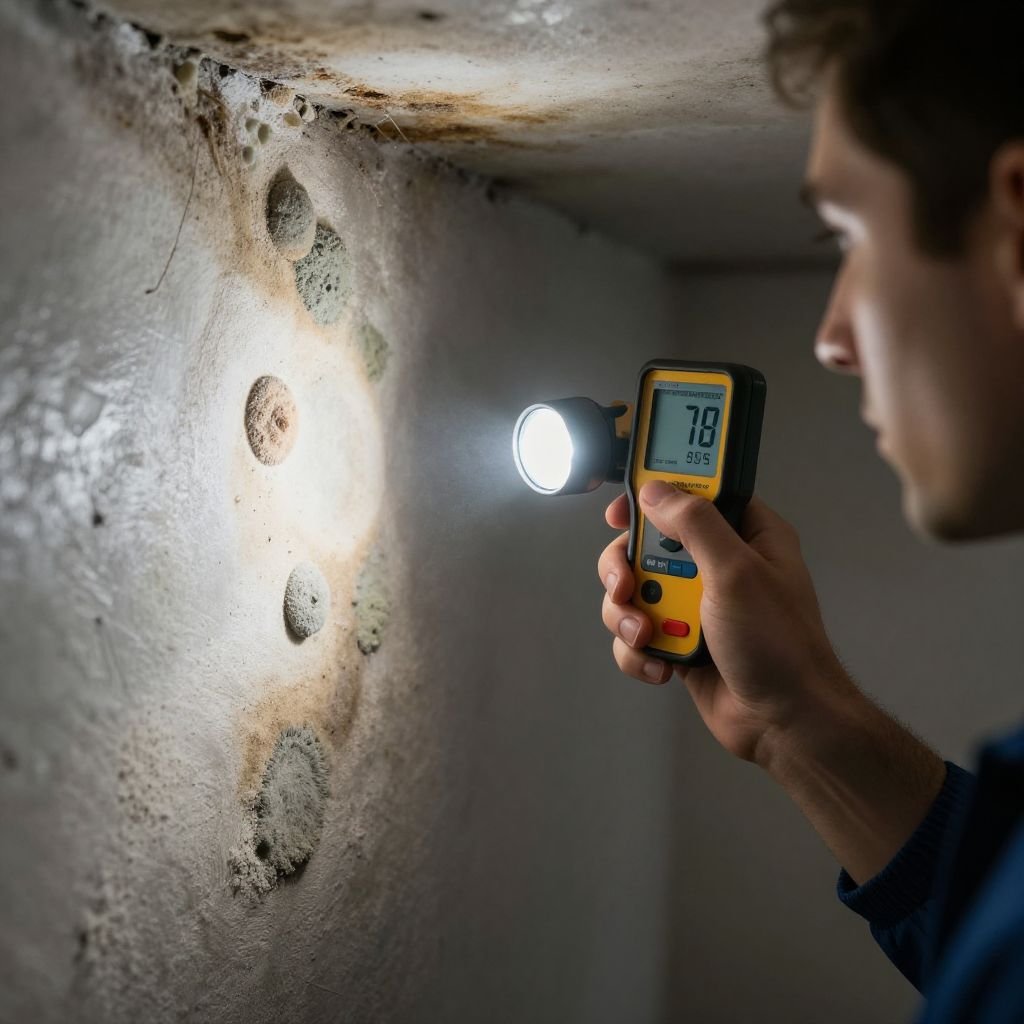
Our remediation process begins with moisture mapping and air quality assessment to locate active growth—not merely visible mold. Highland Heights properties often conceal contamination within HVAC ductwork, behind insulation, and beneath flooring, so surface cleaning alone proves insufficient.
We establish containment barriers before any disturbance to prevent spore dispersal through living areas. For occupied homes near Green Road or Alpha Drive, this step protects family members with allergies, asthma, or compromised immune systems. Negative air pressure systems and HEPA filtration run continuously during removal work.
Material removal follows IICRC S520 standards: porous substrates like drywall, carpet padding, and deteriorated insulation are discarded, while salvageable framing undergoes antimicrobial treatment and thorough drying. We coordinate directly with homeowners' insurance carriers common in Cuyahoga County to document damage and streamline claims.
Prevention completes every project. This includes identifying the moisture source—whether foundation seepage, plumbing failure, or ventilation deficiency—and specifying repairs. Our recommendations for Highland Heights homes typically address grading corrections, sump pump upgrades, or bathroom exhaust improvements suited to the property's era and construction type.
Mold Remediation Services Available in Highland Heights
- Inspection and Testing: Air sampling, surface swab analysis, and moisture detection for residential and light commercial properties
- Containment and Removal: Full-scale remediation for basements, crawl spaces, attics, and living areas with documented clearance testing
- Water Damage Restoration: Emergency extraction, structural drying, and mold prevention following pipe bursts, appliance failures, or storm intrusion
- HVAC and Duct Cleaning: Decontamination of forced-air systems where mold has colonized ductwork or handler components
- Odor Elimination: Source-based treatment of persistent musty smells using oxidation and encapsulation methods
- Preventative Encapsulation: Crawl space vapor barrier installation and dehumidification system design for long-term moisture control
Mold Remediation Pricing in the Highland Heights Area
Remediation costs in Highland Heights reflect project scope, accessibility, and contamination severity rather than zip code alone. Most residential engagements fall between these ranges:
| Service Level | Typical Range | Description |
|---|---|---|
| Limited Remediation | $1,200 – $3,500 | Contained area under 50 sq. ft.; single room with surface mold |
| Moderate Remediation | $3,500 – $8,000 | Multi-room or basement project with material removal and drying |
| Extensive Remediation | $8,000 – $15,000+ | Whole-house contamination, HVAC involvement, or structural repairs |
| Inspection/Testing | $350 – $750 | Comprehensive assessment with laboratory analysis |
Homes in Highland Heights' older neighborhoods may incur additional costs for asbestos-containing material testing before disturbance, given construction-era building practices. We provide itemized estimates following inspection, with no obligation to proceed. Many homeowners' policies cover sudden water damage and resulting mold, though gradual leaks and maintenance-related issues typically are excluded.
Frequently Asked Questions
How quickly can mold spread in a Highland Heights basement?
Under favorable conditions—temperatures between 60–80°F and humidity above 60%—mold colonies can become visible within 48–72 hours of moisture introduction. Cuyahoga County basements often maintain these conditions year-round, making prompt drying critical.
Will mold return after professional remediation?
Recurrence is preventable when the underlying moisture source is eliminated. We warranty our remediation work contingent upon completing recommended moisture control measures, which we document for Highland Heights homeowners.
Is mold in my crawl space dangerous if I never go down there?
Airborne spores from crawl spaces migrate upward through floor gaps, plumbing penetrations, and ductwork. Elevated indoor spore counts can affect respiratory health even in occupied levels far from the contamination source.
Do I need to leave my Highland Heights home during remediation?
Most limited and moderate projects allow residents to remain, with containment isolating work zones. Extensive remediation or occupied-sensitive individuals may warrant temporary relocation for 24–72 hours during active removal.