

Common Mold Remediation Problems in College Park
College Park homeowners face distinct mold challenges shaped by Prince George's County's humid subtropical climate and the area's mix of historic housing stock and university-adjacent rental properties. The Patuxent River watershed and nearby Anacostia tributaries create elevated groundwater conditions that keep basements and crawl spaces perpetually damp, particularly in neighborhoods like Old Town and the Calvert Hills historic district where drainage infrastructure dates back decades.
Summer humidity regularly exceeds 70% from June through September, turning minor moisture issues into full-blown mold infestations within 48-72 hours. University of Maryland rental properties present unique complications—high tenant turnover, deferred maintenance, and dense occupancy patterns accelerate mold spread across multi-unit buildings near Route 1 and the Baltimore Avenue corridor. Many College Park homes built between the 1920s and 1960s lack modern vapor barriers, making wall cavities and unfinished basements prime breeding grounds for Stachybotrys, Aspergillus, and Penicillium species.
Post-rain flooding along the Paint Branch and Northeast Branch tributaries affects properties in the southern and eastern portions of the city. Even homes that never take on visible water suffer from hydrostatic pressure forcing moisture through foundation cracks and slab joints. Musty odors that homeowners dismiss as "old house smell" often signal hidden colonization behind drywall, under vinyl flooring, and within HVAC ductwork—particularly problematic in College Park's split-level and ranch homes where ductwork runs through unconditioned crawl spaces.
How We Help College Park Homeowners
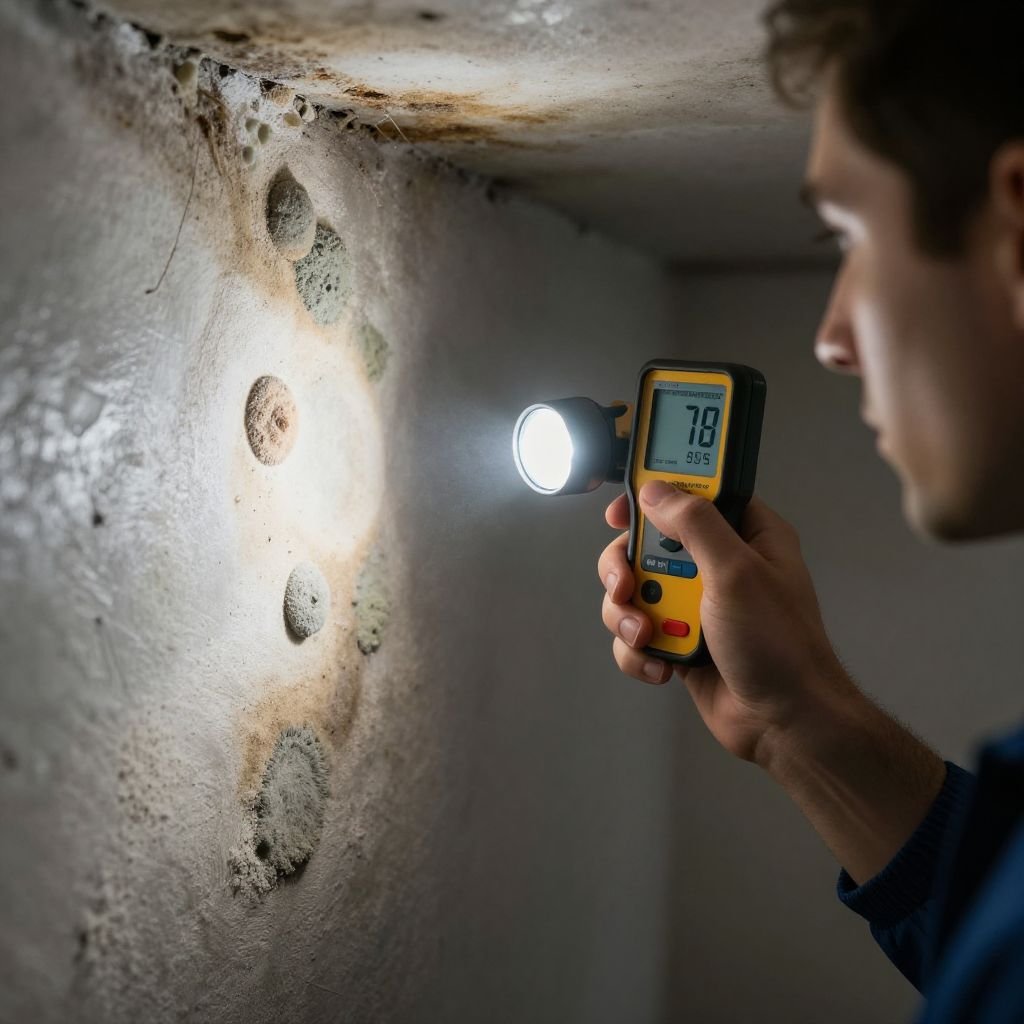
Our remediation process addresses College Park's specific environmental and architectural conditions rather than applying generic protocols. We begin with moisture mapping using thermal imaging and hygrometric testing to identify hidden water intrusion paths common in Prince George's County's clay-heavy soils, which expand and contract seasonally, compromising foundation waterproofing.
For historic homes near the University of Maryland campus, we implement containment strategies that preserve original plaster, hardwood, and trim work while eliminating mold colonies. Rental property owners receive documentation packages satisfying Maryland landlord-tenant code requirements and university leasing standards. We coordinate directly with property management companies and individual landlords to minimize tenant displacement, often completing contained unit treatments without requiring full building evacuation.
Our team understands the urgency of addressing mold before semester starts or lease renewals, and we prioritize College Park properties during peak turnover periods. Post-remediation, we install humidity control solutions calibrated for the area's specific conditions—dehumidification systems sized for below-grade spaces, foundation sealing appropriate for local soil composition, and ventilation improvements that account for the region's summer dew points.
Mold Remediation Services Available in College Park
- Basement & Crawl Space Remediation: Targeted treatment for below-grade mold resulting from College Park's high water table and seasonal flooding patterns
- Whole-House Mold Abatement: Comprehensive remediation for widespread colonization in older homes with compromised building envelopes
- HVAC & Duct Mold Removal: Cleaning and treatment of forced-air systems common in post-war College Park subdivisions
- Attic Mold Remediation: Addressing ventilation failures and roof leak damage, particularly in homes with original cedar shake underlayment
- Emergency Water Damage Response: 24/7 extraction and drying to prevent mold establishment after flooding or pipe failures
- Post-Remediation Clearance Testing: Third-party air quality verification for real estate transactions and landlord compliance
Mold Remediation Pricing in the College Park Area
Remediation costs in College Park typically range from $2,500 for contained single-room treatments to $15,000+ for whole-house abatement in historic properties with extensive hidden damage. Most basement and crawl space projects fall between $4,000-$8,000, reflecting the area's prevalence of below-grade mold issues.
Several factors specific to Prince George's County influence final costs: accessibility challenges in homes with original plaster walls requiring careful demolition, the need for enhanced containment in multi-unit buildings, and coordination with university housing schedules. Properties requiring asbestos or lead remediation alongside mold treatment—common in pre-1978 College Park homes—incur additional abatement costs but benefit from streamlined single-contractor management.
We provide itemized estimates following on-site inspection, with no obligation. Many homeowners' insurance policies cover mold remediation when linked to covered water damage events, and we assist with documentation for claims processing.
Frequently Asked Questions
How quickly can mold spread in a College Park home during summer?
In College Park's humid summer conditions, visible mold growth can establish within 48-72 hours of moisture intrusion. Basements and crawl spaces with temperatures between 60-80°F and relative humidity above 60% see the fastest colonization. Immediate water extraction and dehumidification within the first 24 hours dramatically reduces mold risk.
Do University of Maryland rental properties have special mold requirements?
Yes. College Park rental properties must comply with Maryland's implied warranty of habitability, which includes mold-free living conditions. The City of College Park's rental licensing program requires passing inspection, and visible mold can result in citation. Landlords must address reported mold issues promptly, typically within 30 days, though serious conditions require faster response.
Is mold in my crawl space dangerous if I never go down there?
Absolutely. Crawl space mold affects indoor air quality throughout your home through the stack effect—warm air rises, pulling mold spores and mycotoxins from below into living spaces. In College Park's climate, this transfer intensifies during summer when air conditioning creates negative pressure. Approximately 40% of indoor air originates from below-grade spaces in typical homes.