

Mold Remediation Services in Airmont, NY
Airmont's position in the Ramapo Mountains creates distinct mold challenges for Rockland County homeowners. The elevated terrain, mixed deciduous forests, and seasonal weather patterns produce conditions where moisture accumulates in basements, crawl spaces, and behind finished walls throughout the village.
Homes in Airmont range from mid-century splits and raised ranches to newer construction near the Pomona border. Each property type presents unique vulnerabilities. Older homes with original plaster or lath construction trap moisture differently than contemporary drywall systems. Properties backing up to wooded slopes face increased groundwater pressure and organic debris accumulation that feeds mold colonies.
Effective mold remediation in Airmont requires understanding the village's specific building stock and environmental pressures. Our technicians address the root moisture sources—whether from foundation seepage on hillside lots, condensation in inadequately ventilated attics, or humidity trapped within enclosed porch conversions popular in 1970s-era homes.
What Airmont Property Owners Should Know
The Rockland County climate delivers four distinct mold risk periods: spring snowmelt saturation, summer humidity spikes, autumn leaf-decomposition moisture, and winter ice-dam infiltration. Proactive inspection before these seasonal transitions prevents minor moisture issues from developing into full remediation projects.
Basement environments in Airmont frequently maintain 65-75% relative humidity during summer months—conditions where Aspergillus and Penicillium species colonize within 48-72 hours of moisture introduction. Finished basements with vinyl flooring or paneled walls particularly mask early growth until musty odors or health symptoms appear.
Frequently Asked Questions About Mold Remediation in Airmont
Why do Airmont homes develop mold more frequently than flat-terrain properties?
Hillside construction creates multiple moisture pathways. Surface water flows toward foundations rather than away. Walkout basements have partially exposed walls that experience temperature differentials causing condensation. The elevation also means Airmont receives slightly more precipitation than lower Rockland County areas, and drainage swales between properties often become overwhelmed during heavy rainfall, saturating perimeter soils.
How does mold remediation differ for Airmont's split-level homes?
Split-levels common in Airmont's South Airmont and Cherry Lane areas feature partial basements with integrated crawl spaces and mid-level utility rooms. These transitional zones experience stack effect pressure differentials that draw humid air upward through wall cavities. Remediation requires sealing rim joists, treating crawl space subflooring, and addressing the unique airflow patterns that distribute spores between levels. Simple basement-only treatment often fails because the contamination pathway extends throughout the structure.
What should I do if I smell mold but cannot locate the source?
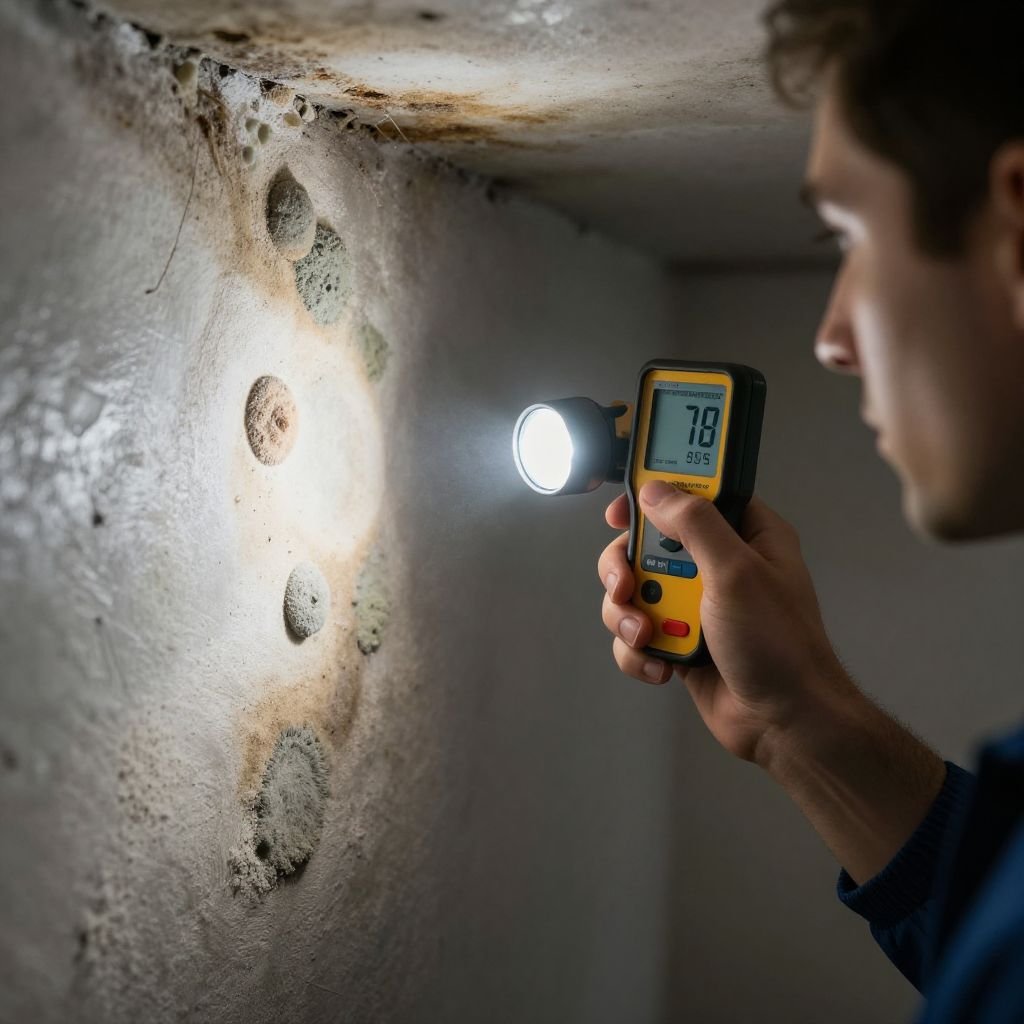
Hidden mold in Airmont properties typically conceals behind bathroom vanities where supply lines penetrate exterior walls, within ceiling cavities below second-floor bathrooms, or inside HVAC ducts running through unconditioned attic spaces. Thermal imaging detects temperature anomalies indicating moisture accumulation. Air sampling compares indoor and outdoor spore concentrations to confirm hidden growth. We recommend against destructive investigation without professional assessment—opening walls without containment protocols releases concentrated spore loads into occupied spaces.
Are there Rockland County regulations affecting mold remediation in Airmont?
New York State requires mold remediation companies to hold Department of Labor licensing, with assessors and remediators maintaining separate certifications. Airmont properties fall under Rockland County Department of Health guidelines for rental housing, which mandate disclosure and remediation timelines when mold affects habitability. While single-family homeowners face no direct enforcement, proper documentation of licensed remediation protects property values and supports insurance claims. Unlicensed contractors operating in Rockland County violate state law and typically lack appropriate liability coverage for cross-contamination events.
Mold Assessment Priorities for Airmont Neighborhoods
Properties near the intersection of Airmont Road and Route 59 experience higher ambient humidity from the nearby Pascack Brook floodplain. Homes in the western sections toward Sloatsburg encounter more significant temperature inversions that trap moisture in valley-floor locations. Eastern properties near the New Jersey border share similar geological conditions with Upper Saddle River and Ramsey, where iron-rich bedrock influences drainage patterns.
Seasonal maintenance specific to Airmont includes clearing leaf accumulation from window wells and foundation drains before November rains, inspecting sump pump discharge lines for freeze protection, and verifying that gutter extensions direct water at least six feet from foundations on sloped lots.