

Mold Remediation Services in St. Matthews, KY
St. Matthews sits in the heart of Jefferson County, where the Ohio River Valley's humid subtropical climate creates persistent challenges for homeowners and business owners alike. The area's seasonal rainfall, combined with mature tree coverage that limits sunlight exposure on many properties, generates conditions where mold thrives in crawl spaces, basements, attics, and behind walls.
Properties near Beargrass Creek and its tributaries face elevated groundwater levels, particularly after spring storms and heavy summer precipitation. Older brick homes common in the St. Matthews interior, along with mid-century ranch properties in surrounding neighborhoods, each present distinct mold vulnerabilities based on construction methods and aging building materials.
Professional mold remediation in this region requires understanding Jefferson County's specific building codes, the area's clay-heavy soil composition that impacts foundation drainage, and the local regulations governing air quality and restoration work. Effective treatment goes beyond visible cleanup to address moisture sources, prevent cross-contamination during removal, and establish long-term protection strategies suited to Kentucky's climate patterns.
Common Questions About Mold Remediation in St. Matthews
How does St. Matthews' location in the Ohio River Valley affect mold growth?
The river valley geography traps humidity, particularly during summer months when dew points regularly climb into the uncomfortable range. This moisture-laden air penetrates structures through crawl space vents, foundation cracks, and attic openings. Homes without adequate vapor barriers or dehumidification systems experience chronic conditions favorable to Aspergillus, Cladosporium, and Stachybotrys colonization. Remediation protocols here emphasize moisture control as the foundational step before any removal work begins.
What should St. Matthews homeowners expect during professional mold remediation?
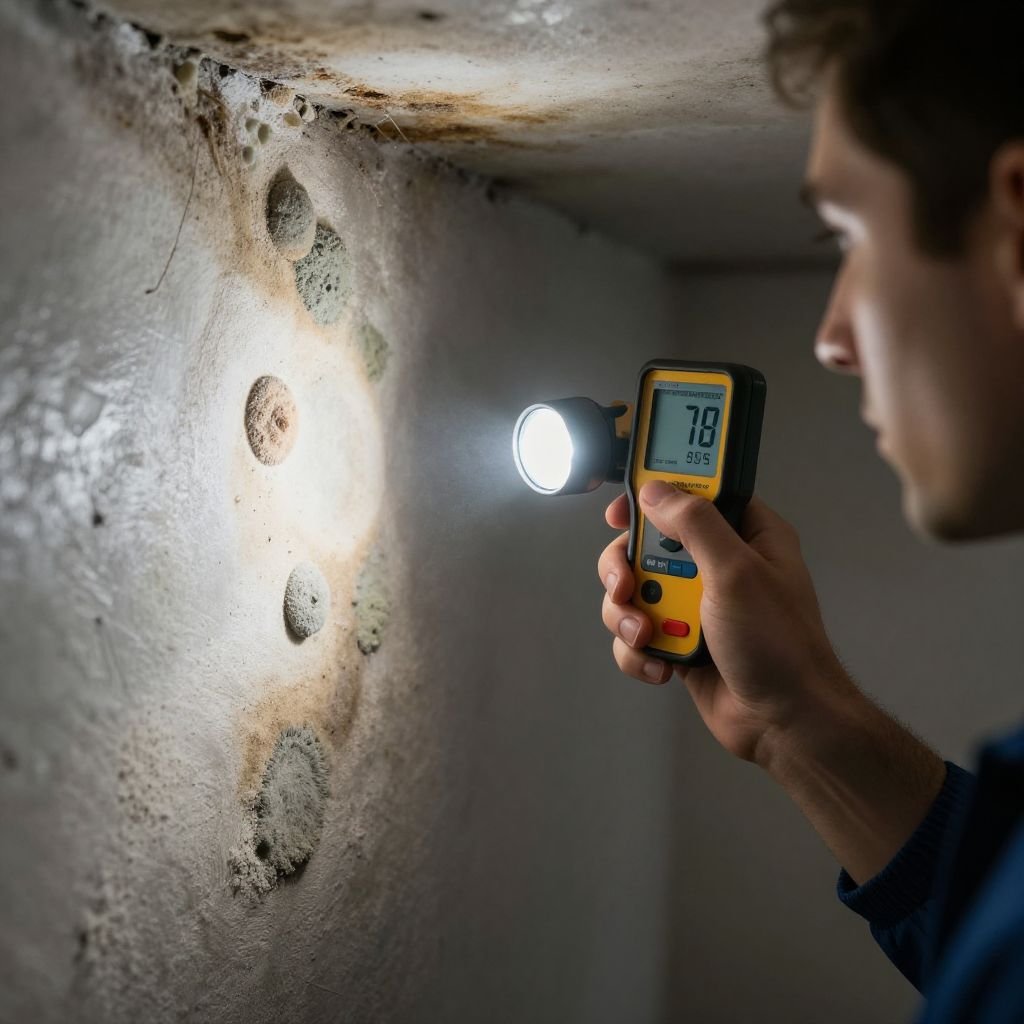
Qualified technicians begin with moisture mapping and air quality assessment to establish contamination boundaries. Containment barriers using negative air pressure prevent spore dispersal during removal. Affected porous materials—drywall, insulation, carpet padding, ceiling tiles—receive controlled demolition when necessary. Non-porous surfaces undergo HEPA vacuuming and antimicrobial treatment. Post-remediation verification testing confirms airborne spore counts return to acceptable levels before clearance. The entire process typically spans three to seven days for residential projects, with timelines extending for larger commercial properties or widespread hidden growth.
Are there specific mold concerns for the commercial corridors along Shelbyville Road and Westport Road?
Retail and restaurant spaces in these high-traffic corridors contend with unique challenges: HVAC systems running continuously, refrigeration condensation, and high occupant loads that increase interior humidity. Many commercial buildings in this area underwent renovations that layered new materials over older structures without addressing underlying moisture issues. Flat roof designs common in 1970s-1980s commercial construction here frequently develop membrane failures leading to slow, hidden leaks. Professional assessment for these properties should include infrared thermal imaging to identify moisture intrusion behind intact wall and ceiling surfaces before visible damage appears.
Remediation Approaches for St. Matthews Property Types
Historic and Established Residential Areas
The original St. Matthews grid features homes built between the 1920s and 1960s with plaster walls, limited insulation, and foundations that have settled over decades. These properties require careful remediation that preserves architectural integrity while addressing mold in wall cavities, behind baseboards, and within crawl spaces where vapor barriers were never installed. Air duct systems in these homes—often original galvanized steel or early flexible ductwork—may harbor contamination and require specialized cleaning or replacement coordination.
Mid-Century and Ranch-Style Homes
Expanding outward from the core, neighborhoods developed in the 1960s through 1980s feature slab-on-grade and crawl space construction with increasingly complex HVAC configurations. Wood paneling, popcorn ceilings, and original bathroom fixtures in these homes create microclimates where mold establishes behind visible surfaces. Remediation here focuses on identifying the moisture source—frequently related to bathroom ventilation failures, window condensation, or grading issues directing water toward foundations.
Commercial and Mixed-Use Properties
The commercial density along major corridors demands remediation protocols that minimize business disruption. Containment strategies must account for shared HVAC systems in multi-tenant buildings, and scheduling often requires coordination with property management to limit impact on neighboring businesses. Documentation for insurance claims and property records follows Jefferson County's specific requirements for commercial restoration work.
Why Jefferson County-Specific Expertise Matters
Mold remediation effectiveness depends heavily on regional knowledge. Kentucky's climate produces different seasonal patterns than coastal or arid regions, requiring tailored moisture management strategies. Local professionals understand the permitting requirements through Louisville Metro Government, the inspection processes for post-remediation clearance, and the common construction practices in Jefferson County subdivisions built across different decades.
Soil conditions around St. Matthews feature dense clay that expands and contracts with moisture, stressing foundation waterproofing over time. Sump pump configurations, exterior drainage solutions, and crawl space encapsulation methods must account for these geological factors to prevent recurrence after remediation completion.