

Common Mold Remediation Problems in New Castle
New Castle sits along the Delaware River where humidity from the water meets older housing stock and clay-heavy soils that trap moisture. This combination creates persistent conditions for mold growth throughout the year.
Homeowners in historic districts like Old New Castle face particular challenges with stone foundations and pre-1940s construction that lack vapor barriers. These properties develop condensation behind plaster walls during summer months when warm, moist air meets cool interior surfaces. Musty odors in basements often signal hidden Stachybotrys or Aspergillus colonies spreading through floor joist cavities.
In newer developments near the riverfront and Airport Road corridor, rapid construction during humid periods trapped moisture within wall assemblies. Drywall that wasn't fully cured before enclosure becomes a feeding ground for mold, with homeowners discovering problems only when visible staining appears or respiratory symptoms develop.
Seasonal flooding from the Delaware and Christina Rivers compounds these issues. Properties in low-lying areas near Battery Park experience water intrusion during storm surges, and even minor basement flooding creates conditions where mold colonizes within 48-72 hours. Many residents attempt DIY cleanup without addressing subsurface moisture, leading to recurring growth behind baseboards and under flooring.
Commercial properties along Delaware Street and the industrial corridor near Route 9 face their own challenges—roof leaks in flat-roofed warehouses, HVAC condensation in climate-controlled facilities, and deferred maintenance in aging manufacturing spaces where production humidity exceeds building capacity.
How We Help New Castle Homeowners
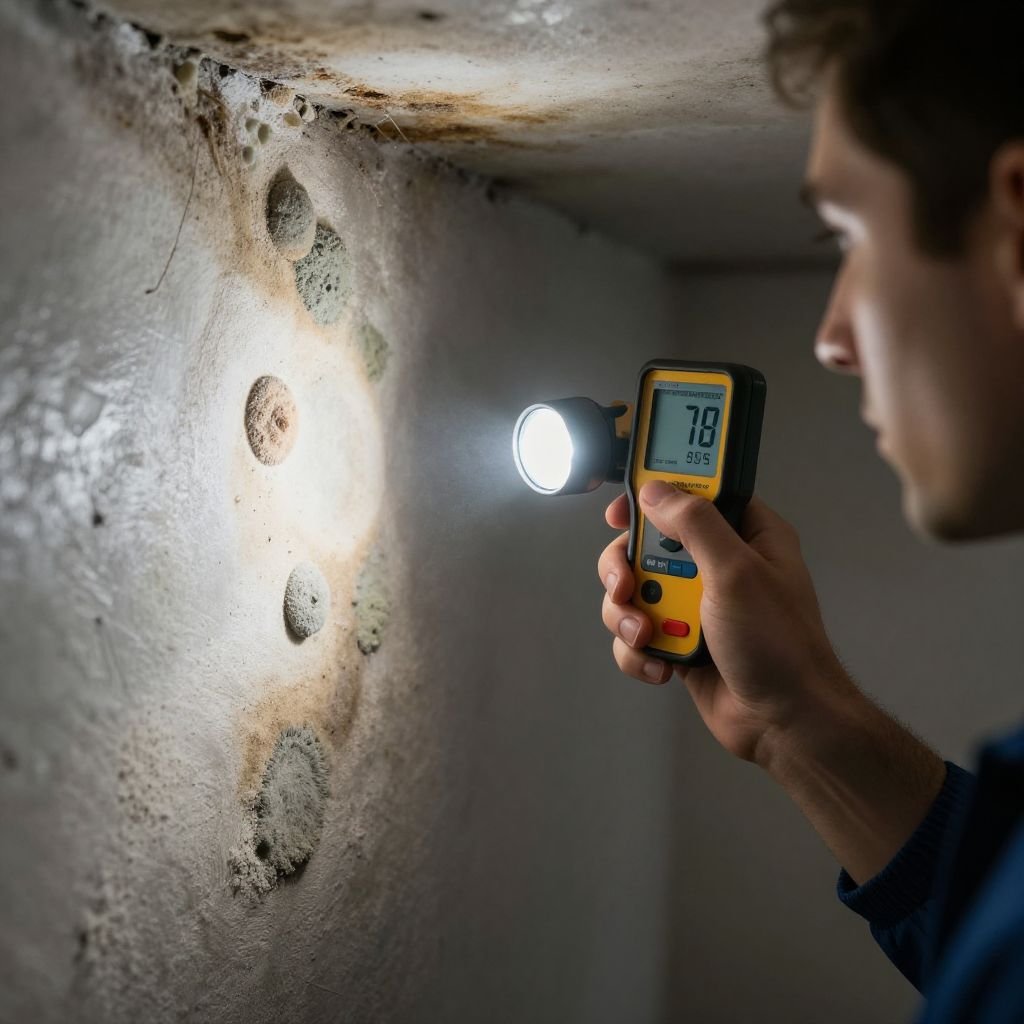
We begin every project with moisture mapping to identify the source—not just the symptom. Our technicians use thermal imaging and hygrometers to trace humidity pathways through your building envelope, whether the origin is groundwater seepage, plumbing failure, or airborne moisture infiltration.
For historic properties, we employ restoration-sensitive techniques that preserve original plaster, trim, and masonry while eliminating active growth. Containment barriers prevent cross-contamination to unaffected areas during remediation, and HEPA air scrubbers maintain negative pressure throughout the process.
Post-remediation, we provide documented clearance testing with third-party laboratory verification. This documentation proves invaluable for real estate transactions, insurance claims, and landlord-tenant disputes that frequently arise in New Castle's mixed rental and owner-occupied market.
Mold Remediation Services Available in New Castle
- Basement Mold Remediation — Complete treatment of below-grade spaces including foundation wall cleaning, floor drain assessment, and dehumidification system recommendations
- Crawl Space Encapsulation & Mold Removal — Vapor barrier installation, sump pump integration, and structural drying for confined spaces common in New Castle's older neighborhoods
- Attic Mold Treatment — Addressing roof leak damage, inadequate ventilation, and insulation-compromised sheathing
- HVAC & Duct Mold Cleaning — Eliminating contamination in forced-air systems that distribute spores throughout living spaces
- Water Damage Restoration — Emergency extraction, structural drying, and preventive treatment to stop mold before it establishes
- Post-Flood Mold Assessment — Rapid response evaluation for properties affected by river flooding or storm damage
- Commercial Mold Abatement — Scalable solutions for office buildings, retail spaces, warehouses, and industrial facilities
- Air Quality Testing & Mold Inspection — Pre-purchase assessments, tenant complaint investigations, and proactive monitoring
Mold Remediation Pricing in the New Castle Area
Most residential mold remediation projects in New Castle range from $1,200 to $6,500, with costs determined by contamination extent, accessibility, and underlying moisture repairs needed.
Limited surface growth contained to a single bathroom or small closet typically falls at the lower end—$1,200-$2,800 including containment, removal, and preventive treatment. Basement remediation involving perimeter walls, floor joists, and humidity control installation generally runs $3,500-$6,500 depending on square footage and whether foundation repairs are concurrent.
Whole-house situations following significant water damage or long-term undetected leaks can exceed these ranges. We provide itemized estimates after inspection, with no obligation. Many homeowners' insurance policies cover mold remediation when linked to sudden water damage, though gradual maintenance-related issues typically are excluded. We document cause-and-origin findings to support your claim when applicable.
Commercial pricing depends on operational constraints, containment complexity, and required documentation protocols. We offer phased approaches for businesses needing to maintain partial operations during remediation.
Frequently Asked Questions
How quickly can mold grow after basement flooding in New Castle?
Mold can begin colonizing within 24-48 hours of water intrusion. Given New Castle's humidity levels, especially during summer months, prompt water extraction and professional drying within this window significantly reduces remediation costs and prevents secondary damage to framing and finishes.
Do historic homes in Old New Castle require special mold remediation approaches?
Yes. Historic construction materials—lime plaster, old-growth timber, horsehair binders—respond differently to modern cleaning agents and aggressive removal methods. Our technicians match treatment protocols to the substrate, preserving architectural integrity while achieving complete mold elimination. We also coordinate with the New Castle Historical Society when properties fall under preservation guidelines.
Will mold come back after remediation?
Recurrence happens when moisture sources remain unaddressed. Our remediation includes identifying and correcting the root cause—whether drainage grading, gutter deficiencies, plumbing leaks, or inadequate ventilation. We warranty our work contingent on implementing recommended moisture control measures, and we offer maintenance programs for properties with chronic humidity challenges.