

Common Mold Remediation Problems in Le Mars
Le Mars homeowners face distinct mold challenges shaped by northwest Iowa's climate and aging housing stock. The Floyd River valley location creates persistent moisture pockets, while seasonal temperature swings from harsh winters to humid summers produce condensation cycles ideal for hidden mold growth.
Basement moisture ranks as the most frequent complaint. Many Le Mars homes built before 1980 lack adequate foundation waterproofing, allowing groundwater seepage during spring thaws and heavy rains. Crawl spaces beneath ranch-style homes common in Plymouth County neighborhoods trap humidity, spawning mold colonies that compromise floor joists before residents detect musty odors.
Agricultural proximity introduces additional complications. Properties near corn and soybean operations experience higher airborne mold spore concentrations, accelerating indoor colonization when moisture intrudes. Post-harvest season brings particular risk as equipment storage and grain handling generate substantial organic dust that feeds mold development in attached garages and outbuildings.
Ice dam damage during Le Mars winters creates sneaky attic mold. Melting snow refreezes at eaves, forcing water beneath shingles where it saturates insulation and sheathing. By the time ceiling stains appear, extensive mold colonization often requires full attic remediation rather than simple spot treatment.
How We Help Le Mars Homeowners
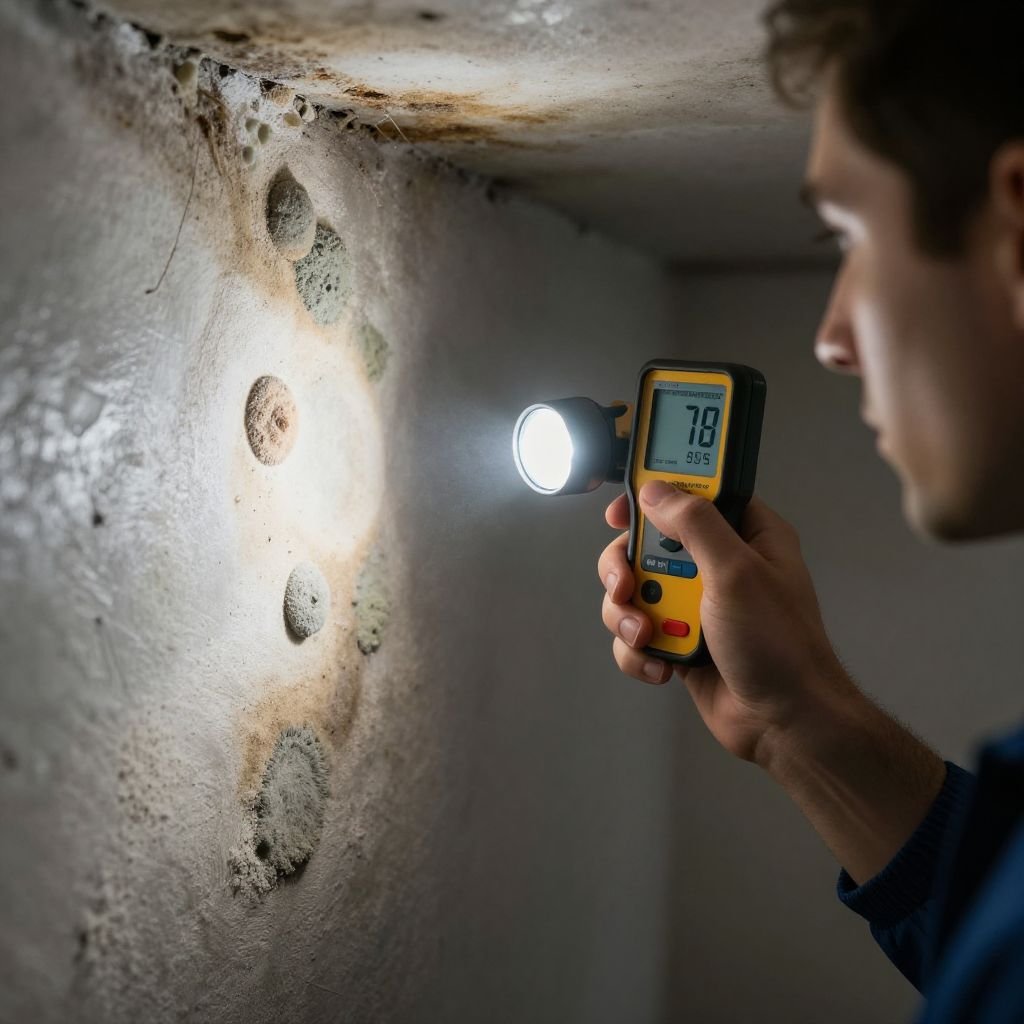
Our approach addresses Plymouth County's specific environmental conditions rather than applying generic protocols. We begin with comprehensive moisture mapping using thermal imaging to identify hidden water intrusion paths common in Le Mars construction styles.
For basement and crawl space issues, we implement permanent drainage solutions alongside mold removal, preventing recurrence rather than treating symptoms repeatedly. When ice dam damage occurs, we coordinate with local roofing contractors to seal thermal bypasses while remediating attic mold, solving both the contamination source and its underlying cause.
We understand agricultural property demands. Our containment protocols protect occupied spaces during outbuilding remediation, and we schedule around planting and harvest calendars to minimize operational disruption for farming families.
Documentation for insurance claims is handled thoroughly, with detailed protocols that satisfy major carriers serving northwest Iowa policyholders. We communicate directly with adjusters when requested, reducing claim friction during stressful recovery periods.
Mold Remediation Services Available in Le Mars
- Basement mold remediation — Complete removal including foundation seepage source identification
- Crawl space encapsulation — Vapor barrier installation with dehumidification systems
- Attic mold treatment — Ice dam damage remediation with ventilation improvement
- Whole-house mold assessment — Air quality testing with spore identification
- Post-flood mold prevention — Emergency drying and antimicrobial application
- Commercial property remediation — Office, retail, and agricultural building services
Mold Remediation Pricing in the Le Mars Area
Remediation costs in Plymouth County typically range from $1,200 for contained crawl space treatment to $8,000+ for extensive basement or whole-house projects requiring structural repairs. Most Le Mars homeowners invest between $2,500 and $4,500 for standard remediation with moisture control improvements.
Several factors influence final pricing: square footage affected, mold species requiring specialized handling, accessibility constraints in older homes, and whether drywall or insulation replacement is necessary. Containment complexity increases costs when living spaces must remain occupied during work.
We provide detailed written estimates following inspection, with no obligation. Insurance coverage varies by policy; we review your documentation and advocate for appropriate claim handling when covered perils like burst pipes or storm damage triggered the mold growth.
Frequently Asked Questions
How quickly can mold spread in a Le Mars basement?
In favorable conditions—typically 60%+ humidity with organic materials present—mold colonies can expand across surfaces within 48-72 hours. Le Mars basements with groundwater seepage often maintain these conditions continuously, making prompt intervention essential.
Is mold testing required before remediation in Iowa?
Testing isn't legally mandated, but we recommend it for suspected toxic species or when health symptoms are present. Documentation also strengthens insurance claims. We offer air and surface sampling with third-party laboratory analysis for unbiased results.
Can I stay in my home during mold remediation?
For contained areas under 100 square feet, occupancy often continues safely. Larger projects or HVAC contamination may require temporary relocation. We establish sealed containment barriers with negative air pressure to protect unaffected spaces when occupancy continues.
How do you prevent mold from returning after treatment?
Permanent prevention requires moisture control. We identify and repair water sources, improve ventilation, and install dehumidification where needed. Our warranty requires maintaining humidity below 60% and addressing new water intrusion promptly.